Newsroom

On the Fourth Anniversary of Myanmar’s Military Coup, a Look at New Approaches to Local Governance

11th March 2025

Karenni

February 1 marked four years since Myanmar's military overthrew the country’s democratically elected government. As the international community observed the anniversary of the military coup, QUNO NY hosted an informal briefing for diplomats by Charles Petrie, former UN Resident Coordinator to Myanmar. The meeting focused on the emergence of new governance models.  

In his remarks, Charles Petrie emphasized that opposition to the military should not be seen as simply a revolt, but as a revolution that seeks to address the root causes of conflict that have undermined Myanmar since it gained independence in 1948. He described new forms of local governance, pointing out that these were not being set up as “a quick fix” but as a way to preserve the state in Myanmar while granting communities greater autonomy.   

The briefing highlighted that the Military junta, also known as the State Administration Council (SAC), has lost control over significant territory. By some estimates, the SAC currently holds effective control over less than 30 per cent of Myanmar's territory. Charles Petrie emphasized that any international support that seeks to reestablish a strong centralized state will simply perpetuate long-standing grievances and conflict. Given this reality, he urged members of the international community to seek out avenues to support the emergence of a new federal democratic system, noting this would bring “a promise of change and gives the UN community another avenue to work toward peace in Myanmar.”  

Having spent time inside Myanmar with communities in Karenni State, Charles described the atrocity crimes being committed by the SAC against civilians. These have included many instances of aerial bombardment of schools, hospitals, and religious buildings as well as the denial of humanitarian aid. According to the UN, the crisis has resulted in the displacement of over 3.5 million people. 

Meeting participants were grateful for the opportunity to hear this analysis and learn more about the situation on the ground. QUNO remains committed to working with partners and engaging diplomats to explore innovative pathways toward peace in Myanmar.  

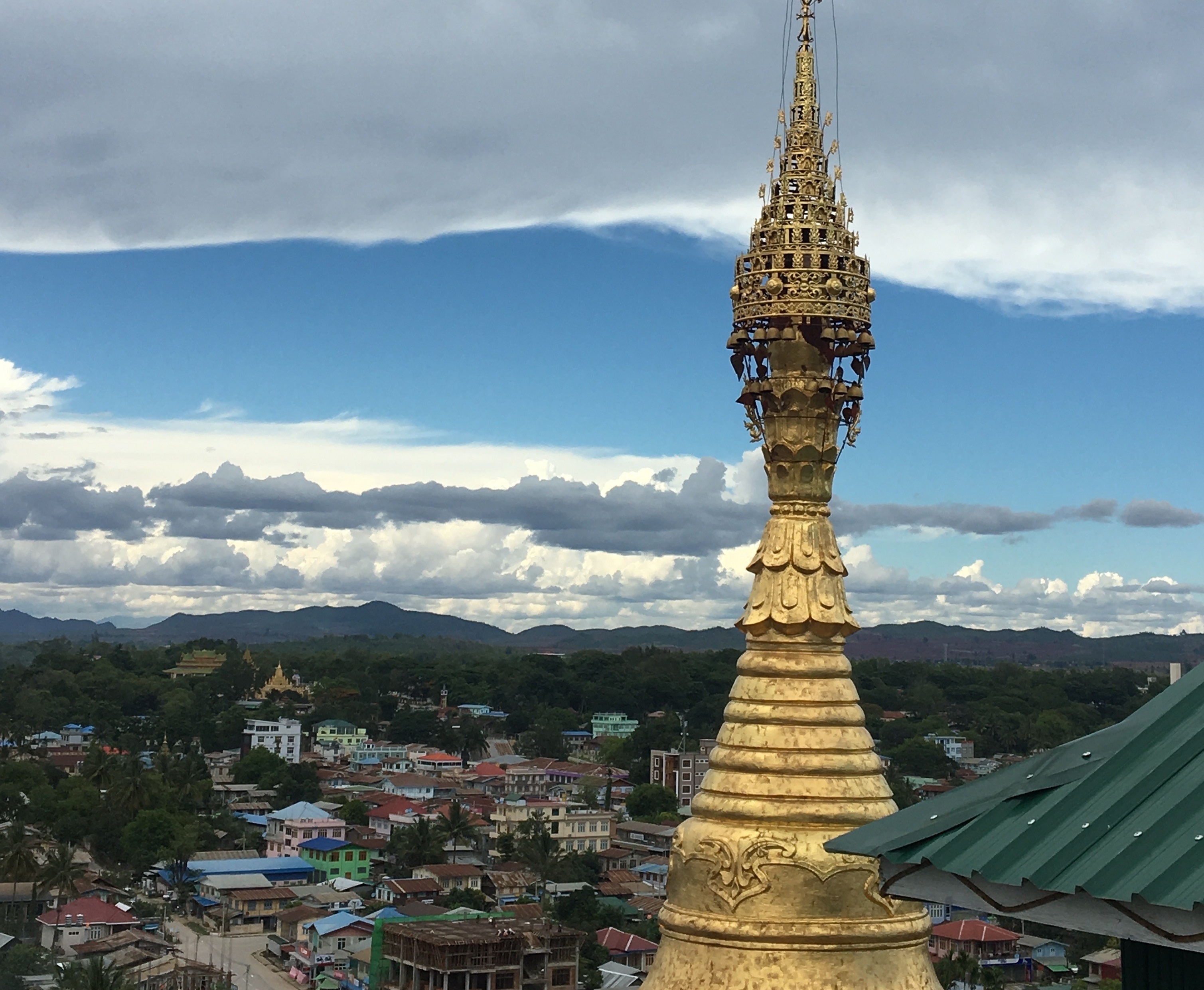
Image: A view of Karenni State, by Sarah Clarke
Areas of work:

Explore more

The 2025 Peacebuilding Architecture Review: Progress, Omissions, and What’s at Stake

The 2025 Peacebuilding Architecture Review: Progress, Omissions, and What’s at Stake

The United Nations’ Peacebuilding Architecture Review (PBAR) takes place every five years, providing UN actors and other stakeholders with an opportunity to review and improve the implementation and impact of the UN’s peacebuilding efforts. The year 2025 marked the fourth review since the creation of the UN peacebuilding architecture, comprised of the Peacebuilding Commission (PBC), the Peacebuilding Fund (PBF), and the Peacebuilding Support Office (PBSO). This most recent review occurred within a global context of notably pervasive conflict, high military expenditures, widespread political instability, and apprehension towards multilateralism. While the 2025 PBAR was more comprehensive than past PBARs, it also saw unprecedented acts of language dilution and omission, revealing disagreements among member states on key issues.   The 2025 review features changes in language and introduces new provisions that set it apart from earlier reviews. Notable omissions include references to multilateralism, gender, The Pact for the Future, The PBC Action Plan on Youth, and provisions for a PBC annual review of the Security Council agenda. Language on sustained financing for peacebuilding was also omitted. These shifts expose new gaps, making it harder for member states to prioritize these essential areas in the peacebuilding architecture’s objectives and implementation. Simultaneously, the twin […]

Applications Now Open for QUNO New York Programme Assistants 

Applications Now Open for QUNO New York Programme Assistants 

The Quaker United Nations Office in New York is now accepting Programme Assistant applications for the 2026-2027 year. This is an exciting opportunity for young professionals to gain experience at the United Nations, and to both learn about and contribute to Quaker work at the UN. The application is open to both Quakers and those who align with Quaker values. QUNO highly encourages those interested in international affairs, peacebuilding, and quiet diplomacy to apply. The application period closes February 16th, 2026.   Status: Full – Time, Specific Term (12 months) Beginning September 1, 2026 Location: New York, NY Application Deadline: February 16th, 2026, 11:59pm Eastern Time For consideration, please attach your Cover Letter and Resume to the online application here in addition to answering the Application Questions.

QUNO attends COP30 in Brazil: Report 2 of 2

QUNO attends COP30 in Brazil: Report 2 of 2

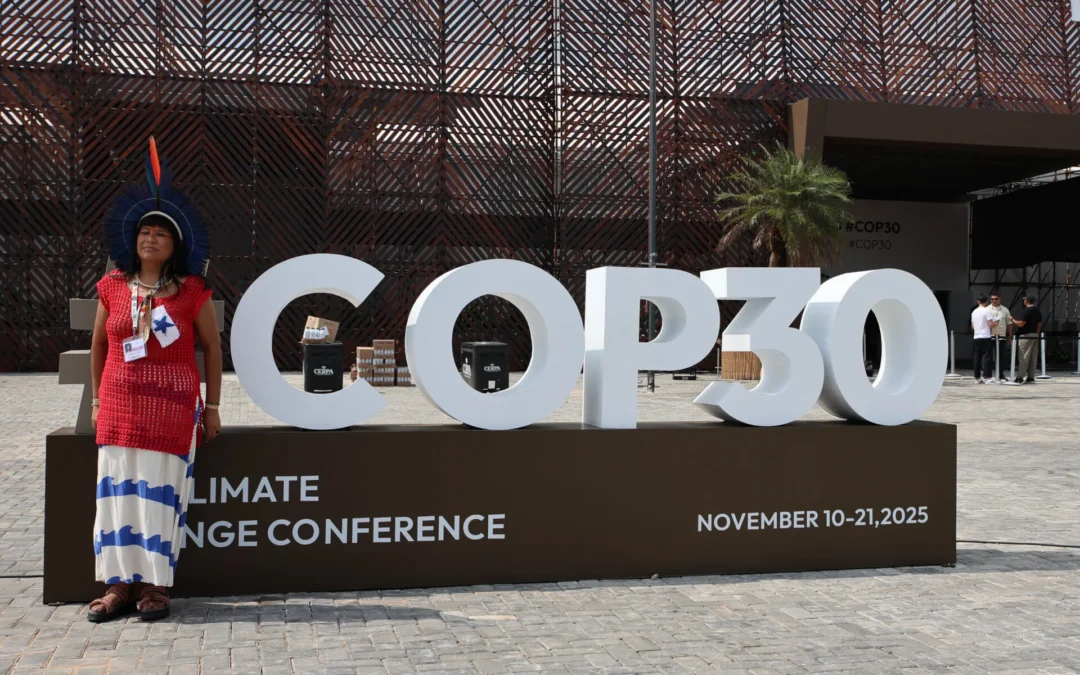
QUNO participated in the Conference of the Parties (COP30), held from 9–23 November in Belém, Brazil. Following the first report on QUNO’s activities at COP30 (available here), this second report provides an analysis of key areas of concern as well as positive outcomes observed during the conference. This report explains why COP30 was far from an uneventful COP. Hosted in the heart of the Amazon rainforest, COP30 witnessed a renewed presence of civil society and Indigenous Peoples, intense protests spilling into the venue, and even a fire incident. Within the negotiation rooms, coordinated strategies of denial tried to silence language on fossil fuels, the latest climate science, the major drivers of greenhouse gas emissions, and even the recognition of human rights. However, at COP30, that thick wall of denial began to show cracks, emerging from different negotiation groups. By the end of the conference, participants observed early flowers blooming from these cracks in the form of emerging coalitions bringing together developed, developing, and least developed countries. To read the full report, please download the document below.

Applications are Now Open: Quaker United Nations Summer School 2026

Applications are Now Open: Quaker United Nations Summer School 2026

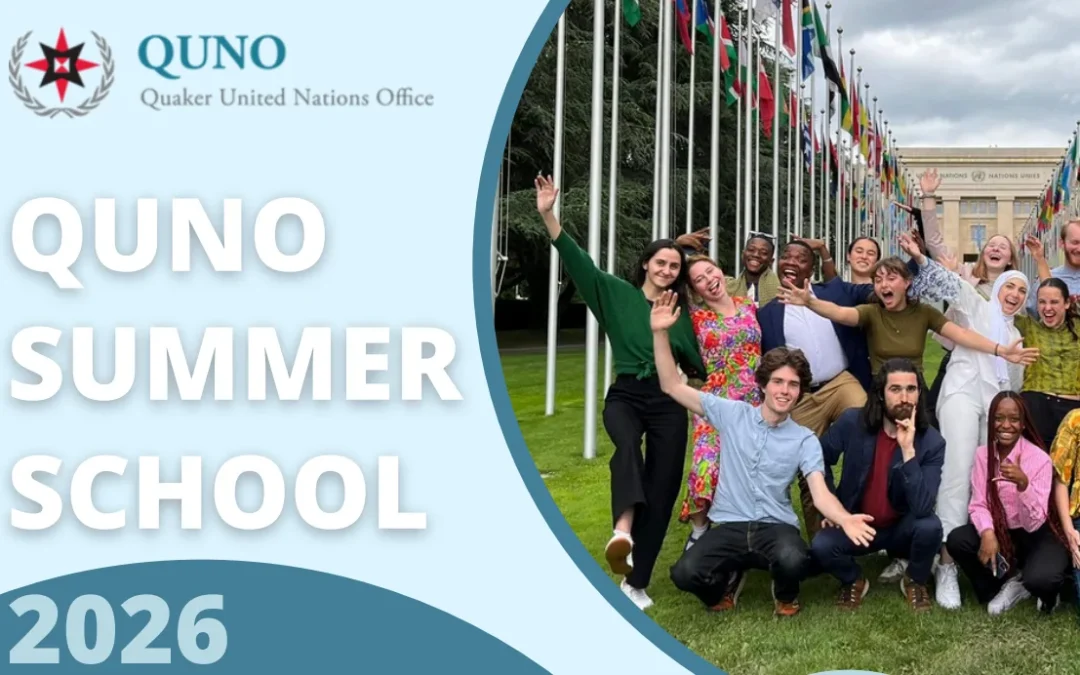
We are excited to announce that the applications for the Quaker United Nations Office Summer School (QUNSS) 2026 are now open!  QUNSS is a two-week programme where young changemakers are introduced to the United Nations and the vibrant international community in Geneva to deepen their understanding of multilateralism, strengthen their policy, negotiation, and advocacy skills, and connect with a supportive international youth network rooted in Quaker values to promote peace, justice, and the protection of Earth.  This year’s themed edition will explore today’s debates on the value and challenges of multilateralism, supporting participants to accurately understand, critically question, and humanize the United Nations.  Over the course of the programme, participants will:  We welcome applications from young people aged 20–26 from all regions and backgrounds who are globally minded, locally rooted, and involved in areas such as social justice, community engagement, climate action, advocacy, or policy, among others.  The deadline for applications is January 25th, 2026 at 23:59 Central European Time (CET).  For the full description of QUNSS 2026, please see the document below. To apply, please access this application form.

At a critical moment, Security Council Resolution on Gaza falls short

At a critical moment, Security Council Resolution on Gaza falls short

On Monday, November 17, the UN Security Council adopted resolution 2803 (2025) authorizing the creation of an “International Stabilization Force” and a “Board of Peace” aimed at addressing the critical security, humanitarian, and reconstruction needs in Gaza. The resolution affirms the importance of enabling humanitarian aid, maintaining a ceasefire, and the goal of working towards “a horizon for peaceful and prosperous coexistence.” However, QUNO notes with concern the resolution’s disregard for the consent or agency of Palestinians within the mechanisms proposed by the resolution. Furthermore, the resolution fails to establish clear mechanisms for transparency, accountability, and effective humanitarian aid and reconstruction. Both observers and UN member states have pointed out that the resolution’s unilateral approach could sideline the United Nations and risk repeating colonial actions and ideologies that lie at the heart of the conflict.   At its core, the Security Council resolution gives UN backing to the “Comprehensive Peace Plan,” also known as the “20-point plan,” proposed by US President Donald Trump earlier this year. The United States proposed the resolution and lobbied strenuously to push it through the Security Council on an expedited timeline. The resolution gives a green light to main tenets of the President’s plan, principally, […]

Drawing Hope: Children Reimagining Peace Across Borders

Drawing Hope: Children Reimagining Peace Across Borders

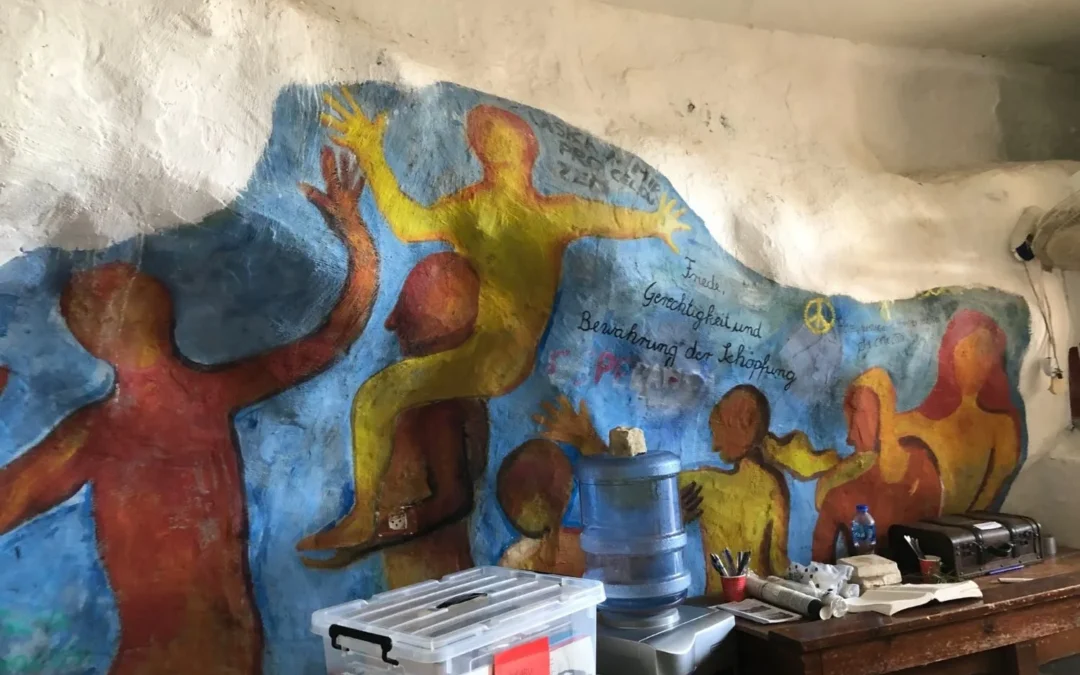
In a world often divided, Drawing Hope is a trans-local peace project that uses children’s art to remind us of our shared humanity. Through artwork created by children, the exhibit sends messages of hope, peace, and reconciliation. After being displayed in venues around the world, Drawing Hope arrived at the United Nations in New York City in early November. QUNO worked closely with the American Friends Service Committee, Okedongmu Children, and the Permanent Mission of Ireland to ensure the exhibit could be displayed inside the UN. From 10 to 21 November, diplomats, UN officials, and guests were able to view drawings created by children in eight countries: North Korea, South Korea, Japan, South Africa, Colombia, Cambodia, Ireland, and the United States. Visitors were inspired by the simple example of children working to connect, transcend barriers, and use creativity to build understanding and empathy across divides. Drawing Hope began on the Korean Peninsula, which in 2025 marks 80 years of division between North and South Korea. Over the past eight decades, cross-border interactions have been strictly prohibited, with both sides dehumanizing the other through propaganda, influencing adults and children alike. As a result, many children grew up surrounded by narratives of […]