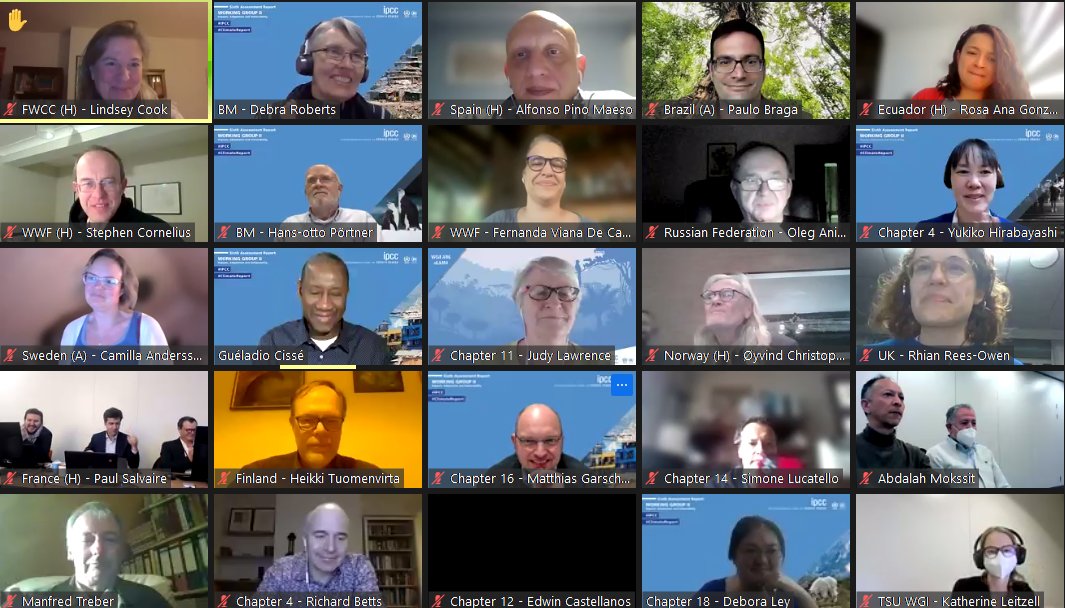
The Quaker United Nations Office in Geneva, under the Friends World Committee for Consultation (FWCC), is the only accredited faith-based observer organisation actively engaged at the Intergovernmental Panel on Climate Change (IPCC). From 14-27 February, the IPCC held an intergovernmental meeting to finalise a Summary for Policy Makers (SPM) of its report, Climate Change 2022: Impacts, Adaptation and Vulnerability. This is the second of three sections completing the Sixth Assessment Report (AR6), which collates the latest climate science – what is happening, why, and what we can do to transform human activities driving global heating – and involves hundreds of scientists worldwide and thousands of peer-reviewed studies. Once approved by governments, IPCC reports have been used by citizens to in turn hold their governments to account for insufficient action on climate change. During the IPCC meeting, Lindsey Fielder Cook, Representative for the Human Impacts of Climate Change at QUNO Geneva, made 29 interventions on behalf of FWCC. Her interventions can be read in the document attached below, and using the links for the Climate Change 2022: Impacts, Adaptation and Vulnerability SPM (link), the FWCC press release (link), and a 4 minute video explaining our IPCC work (link).
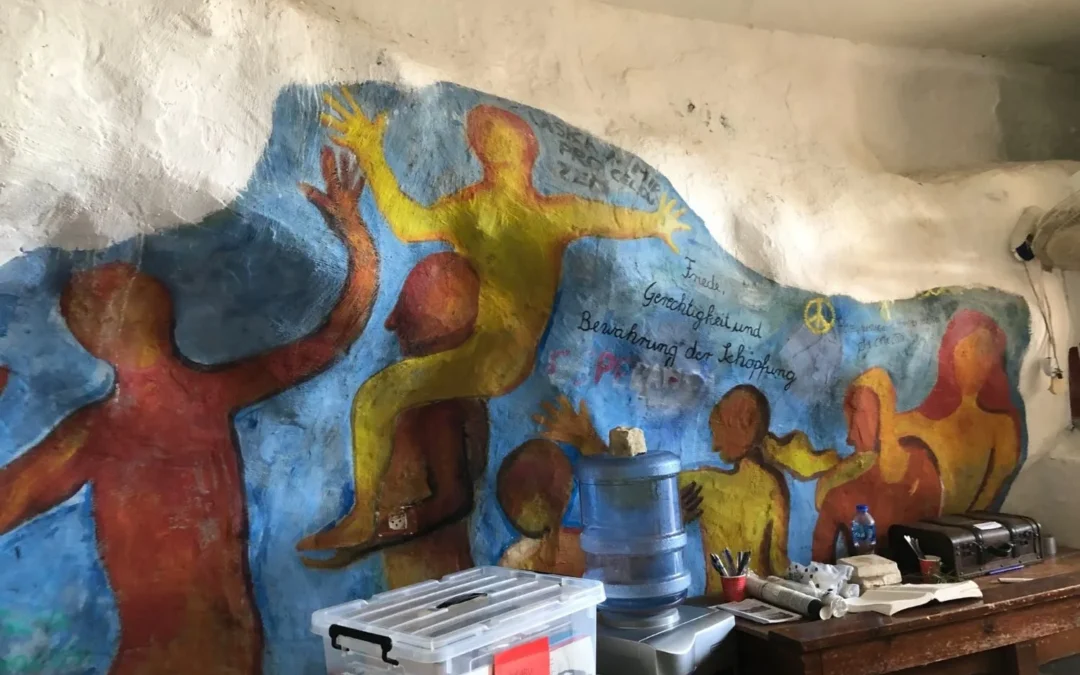
Former Programme Assistant bears witness in the Occupied West Bank
Former Programme Assistant Ailih Weeldreyer, now a National Organizer with the World Student Christian Federation – US, reflected with QUNO-New York about her experience accompanying a group of students on a solidarity pilgrimage through the Occupied Palestinian West...