Newsroom

Saying Goodbye to QUNO’s 2024-2025 Programme Assistants

16th September 2025

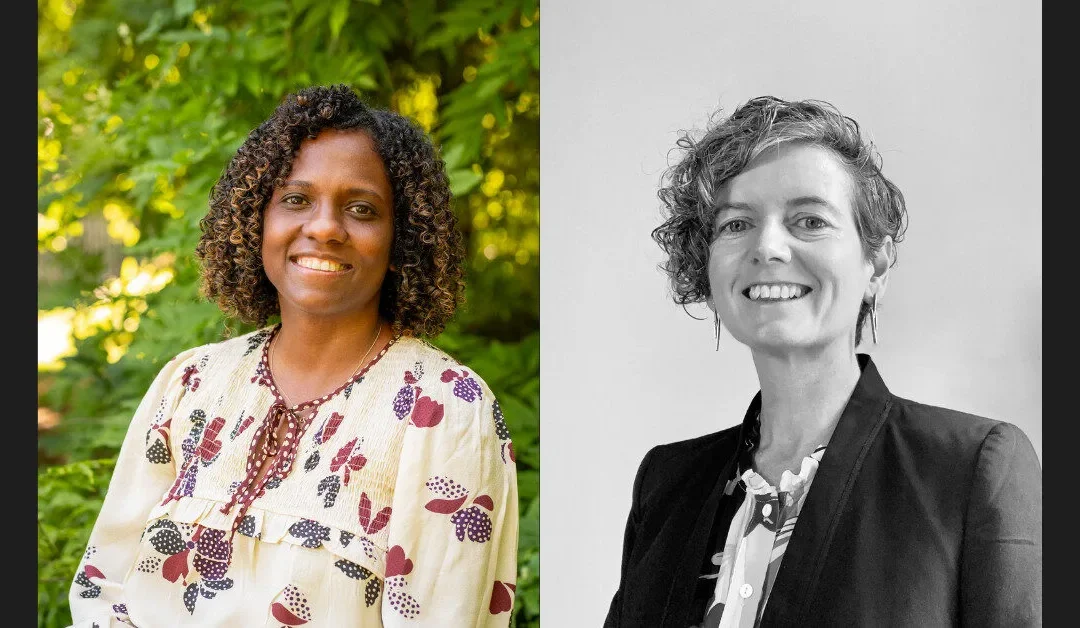
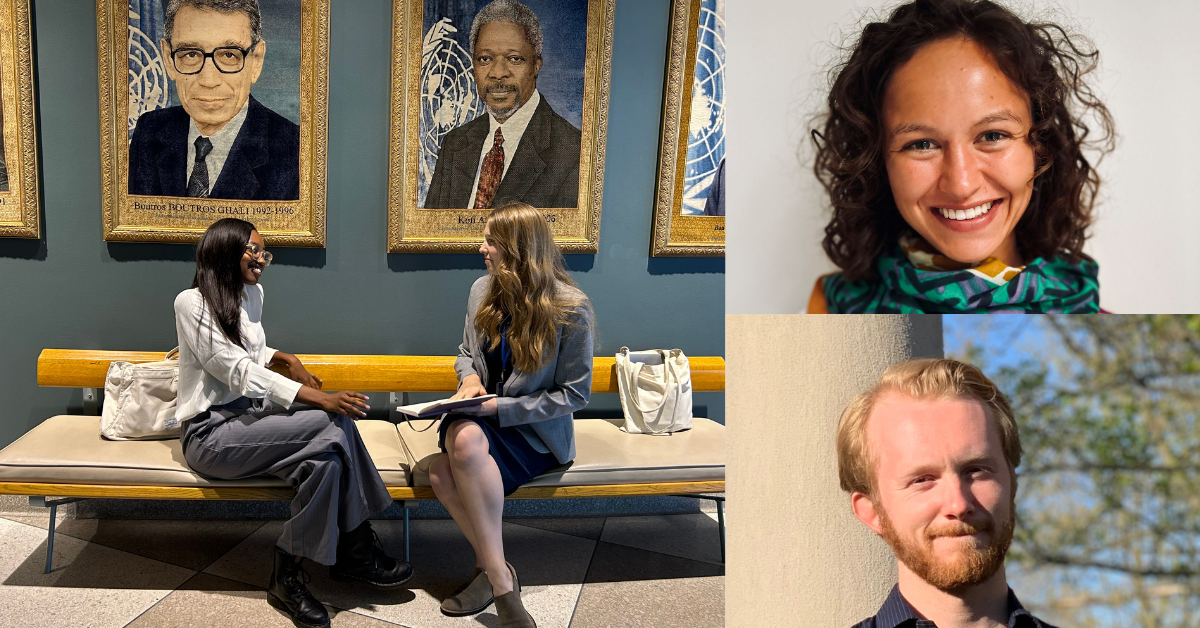
With the arrival of the fall season, the 2024-2025 cohort of Programme Assistants at QUNO’s offices in both New York and Geneva prepared for their departure. Chelsea Comas and Ailih Weeldreyer wrapped up their tenure at QUNO NY, and Johan Cavert and Kaya Van der Horst finished their terms at QUNO’s Geneva office. All four of these bright young professionals contributed greatly to our work over the past year and demonstrated their capacities to learn and grow from their experiences. Thanks to them, the QUNO team has been able to meet the challenges of yet another trying year in international issues. We thank them sincerely for their work and wish them the best on what lies ahead! 
 
In reflecting on their terms at QUNO, the departing Programme Assistants shared some parting thoughts:  
 
“QUNO’s deep commitment to diplomacy, multilateralism, and peacemaking will serve as guiding light for me as I begin law school at Columbia University and continue to advocate for the recognition of environmental human rights that recognize the dignity and humanity of every person on our planet.” – Johan Cavert 

“My year at QUNO has been full of learning opportunities that helped me grow both professionally and personally. It was particularly impactful to contribute to QUNO’s work on reparatory justice and the UN Permanent Forum on People of African Descent. This experience has shaped the way I approach advocacy, emphasizing people-centered strategies and the pursuit of positive peace. I am excited to carry these lessons forward as I begin my law studies at Elisabeth Haub School of Law at Pace University.” – Chelsea Comas 

“Although there are countless memorable moments to choose from, the invigorating, buzzing energy of the Human Rights Council sessions always inspired me. It was a time where people from all around the world mobilized to collectively address human rights issues and I felt proud to be there as part of QUNO. While 2025 has proven to be a particularly challenging time for multilateralism, working at QUNO has shown me the power of human connection and I aspire to embed this practice in future work endeavors.” – Kaya Van der Horst 

“I’m taking away from my time at QUNO a deep appreciation for the impact of sustained dedication to peace and for the power of human-to-human conversations. I am inspired by colleagues in the faith-based advocacy community who remain committed to peace and flourishing for all people over years and decades. It encourages me to maintain my own spirit of hope as I begin my career and envision a life dedicated to action for peace. In the second half of August, I’ll begin a new role with the World Student Christian Federation in the United States as their national organizer. I’m so grateful for all I’ve learned at QUNO and ready to utilize the relationships and knowledge I have built this year to connect Christian students in the US to advocacy for international peace and justice.” – Ailih Weeldreyer 

As the members of the 2024-2025 PA cohort forge their own paths ahead, all of us at QUNO are excited to see them continue to advocate for peaceful and just societies. 

Each year QUNO’s teams in both New York and Geneva welcome emerging professionals with a passion for peace and justice to contribute to our efforts as Programme Assistants. These 12-month appointments offer recent graduates and early-career professionals the opportunity to gain valuable experience working with multiple facets of the United Nations and the chance to learn from QUNO staff while contributing to our initiatives. 
Explore more

QUNO attends COP30 in Brazil: Report 1 of 2

QUNO attends COP30 in Brazil: Report 1 of 2

QUNO’s Human Impacts of Climate Change (HICC) staff, Lindsey Fielder Cook and Daniela Campos, were present at the Conference of Parties (COP30) from 9–23 November in Belém, Brazil. This first report focuses on QUNO’s activities and will be followed by a second report offering an analysis of both concerns and positive outcomes.  While knowing that more than 56,000 people from all over the world came together to share and negotiate global climate action, some might still wonder what happens inside COPs. To offer a clearer glimpse of this experience, we are sharing a narrated report of the major events, negotiations, and interactions where QUNO brought a Quaker voice—advocating peaceful, just, and equitable transformations of activities driving existential levels of climate change and related planetary crises.  Amplifying our Voice and Values at COP30 – Interfaith events : With our Interfaith Liaison Committee colleagues, we helped host an interfaith Talanoa Dialogue at the Lutheran Church Igreja Evangelica de Confissão Luterana, bringing together over 120 people in person from all over the world, with translation between English and Portuguese, and more than 30 participants online.  During the COP, we supported faith-based colleagues in their efforts, including newcomers navigating the space, and engaged with […]

QUNO at the IPCC’s session in Lima

QUNO at the IPCC’s session in Lima

From 27–30 October, QUNO participated in the 63rd Session of the Intergovernmental Panel on Climate Change (IPCC) in Lima, Peru. The IPCC collates the best available climate science worldwide, and its reports help advise governments and policymakers on what is happening, why, and the available options for climate policy and action. During this meeting, country delegates, scientists, and observers prioritized three difficult key issues: the timeline for the publication of the 7th Assessment Report (AR7); the inclusion of high-risk marine geo-engineering in a Methodology Report; and gaps in the IPCC budget. On the first issue, and for the fourth consecutive attempt, country delegates were unable to agree on a timeline for delivery. On the second issue, QUNO worked effectively with a range of concerned countries and observers to prevent the inclusion of marine geo-engineering as a carbon dioxide removal technology. On the third issue, the budget was passed for 2026 but remains significantly underfunded for the assessment cycle. For more information about QUNO’s work at the IPCC and our Plenary interventions, as well as the Earth Negotiations Bulletin, which references our (FWCC) interventions, please download the reports below.

QUNO Representative brings Quaker Perspective to Disaster Resiliency

QUNO Representative brings Quaker Perspective to Disaster Resiliency

QUNO NY Representative Kavita Desai had the rare opportunity to moderate a panel at the United Nations entitled “Investing in Resilience to Safeguard the Sustainable Development Goals” during a special event held on October 16, 2025, hosted by the UN Office for Disaster Risk Reduction (UNDRR) and the UN Economic and Financial Committee.  The UNDRR event, “Towards a Risk-informed approach to Development: Financing Resilient Development Today for a Sustainable Tomorrow,” highlighted the need to increase investment in disaster protection measures such as early warning systems, community protection plans, and resilient infrastructure to safeguard progress made towards achieving the Sustainable Development Goals (SDGs), a series of 17 globally agreed-upon goals that form a blueprint for sustainable peace and prosperity. As Desai noted in her opening remarks, “It is well known that an ounce of prevention is worth a pound of cure…investing in DRR saves resources in the long-term and futureproofs development gains.”   Desai’s panel provided valuable insight on the necessity of financing resilient development, warning that progress towards the SDGs has been limited and that current investments in disaster risk and resilience account for only about 25% of actual needs in many countries. The panel noted that this funding gap emerges […]

Real Costs of the Push to Rearm in Europe and Beyond: Implications for Arms Control, Business and Human Rights, and International Law

Real Costs of the Push to Rearm in Europe and Beyond: Implications for Arms Control, Business and Human Rights, and International Law

To discuss the costs and risks of exponentially rising military spending, the Quaker United Nations Office (QUNO) Geneva, together with the American Bar Association Center for Human Rights (ABA CHR) and the Women’s International League for Peace and Freedom (WILPF), co-hosted a public webinar involving a panel of 5 experts from diverse fields. The event, “The Real Costs of the Push to Rearm in Europe and Beyond: Implications for Arms Control, Business and Human Rights, and International Law” explored how the rapid increase in global defence budgets affects social investment, democratic governance, and climate resilience. It was attended by a broad community, with participants from the fields of disarmament, arms control, peace-building, human rights, humanitarian law, climate change, gender equality, representing governments, international organizations, academia, civil society, and members of the general public. Setting the Scene Dr. Yvette Issar (QUNO) underscored that global military spending has reached an all-time high of 2.7 trillion USD, a figure projected to rise sharply in the coming decade. These rising figures “are not yielding greater peace, but are instead undermining our shared vision for a sustainable future.” The following guiding questions were posed at the outset of the discussion: Dr. Nan Tian (SIPRI) outlined current trends in military expenditure, describing an “exceptionally […]

A Call for Climate Action: Protect Human Rights and Decrease Military Expending

A Call for Climate Action: Protect Human Rights and Decrease Military Expending

HICC at the Human Rights Council QUNO participated in the climate and environmental discussions held in the 60th session Human Rights Council in Geneva. Through its Human Impacts of Climate Change (HICC) programme, QUNO delivered an oral statement on the critical role of human rights in climate action. Additionally, HICC contributed to a discussion on how military activities undermine the right to a healthy environment through their toxic and hazardous impacts.  Lindsey Fielder Cook, HICC’s Representative, served as a panelist in the side event The Toxic Impact of Military Activities alongside the UN Special Rapporteur on Toxics and Human Rights, and representatives from Earthjustice, the Center for Global Nonkilling, and Dejusticia. The event discussed the findings and implications of the Special Rapporteur’s recent report on the human rights impacts of hazardous substances and waste resulting from military operations. Building on the Quakers Peace Testimony, QUNO emphasized that war is an abomination of human rights and highlighted how this report proves that military activities harm human beings and earth far beyond wartimes. Lindsey also underscored that military activities are responsible for nearly 5.5% of global greenhouse gas emissions. However, countries are not required to report these emissions into their National Determined […]

‘Deadlock of Imagination’: QUNO Invites Reflection on Approaches to Sustainable Energy Transformation at the Forum on Democracy and Climate Change

‘Deadlock of Imagination’: QUNO Invites Reflection on Approaches to Sustainable Energy Transformation at the Forum on Democracy and Climate Change

Lindsey Fielder Cook, QUNO’s Representative on the Human Impacts of Climate Change, pointed out clear pathways and criteria to achieve sustainable and equitable energy access at the Forum on Human Rights, Democracy and the Rule of Law. In its 5th session, the Forum addressed the theme: “Democracy and Climate Change: Focusing on Solutions”, held in Geneva on the 13th and 14th of October.  Her contribution can be watched here. Joining the panel on “Interconnected Solutions to Interconnected Problems”, Lindsey emphasized that democracies prioritizing the question, “Is this best for society?” rather than “Is this best for the economy?”, are more likely to deliver a sustainable energy transition experienced as fair and effective.  In addition, energy transitions that integrate human rights-based approaches are less likely to face societal backlash. Lindsey advised asking the following questions when evaluating sustainable energy policies: Lindsey invoked the words of recently released from prison Egyptian/British human rights voice,  Alaa Abd el-Fattah, to highlight a divide in global energy transition dynamics, suggesting that we are facing a “deadlock of imagination” in the Global North and a “deadlock of possibility” in the Global South.Other panelists provided clear examples and best practices on rights-based solutions in the sectors of […]