Newsroom

QUNO Genevaโ€™s Peace and Disarmament programme engagement at Human Rights Council

14th October 2022

MicrosoftTeams-image

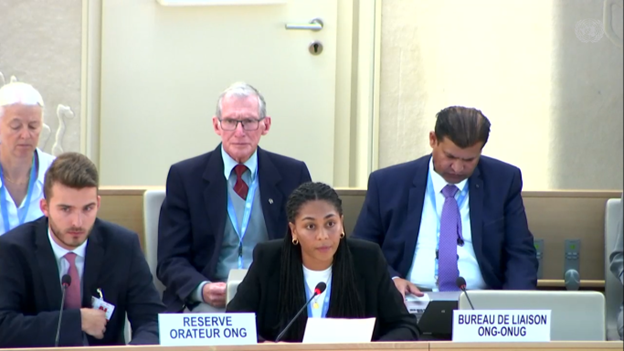
At the 51st session of the Human Rights Council – which has come to a close – the Peace and Disarmament programme engaged on two key thematic areas of work: sustaining peace and arms control.

QUNO’s work on Peace and Disarmament is rooted in the understanding that sustainable peace is a holistic process, linked with human rights, social and economic justice, and political participation. This understanding also underpins our engagement at the Council – where we continue to call for more effective and coherent cooperation across all pillars of the UN – namely the human rights, development, and peace & security pillars. We reiterated this call in our Item 3 statement – highlighting our continued wish for member states of the HRC and Peacebuilding Commission (PBC) to continue to work together to develop opportunities for further exchange and dialogue, and to work towards enabling an annual briefing by the PBC chair to the HRC. In line with this understanding of sustainable peace, the programme continues to support ways in which the HRC explores its prevention mandate.

The programme therefore also engaged on Resolution 51/14 on the role of prevention in the promotion and protection of human rights focused on accountability measures and was put forward by Ukraine on behalf of a group of member states. QUNO particularly welcomes all HRC mechanisms to integrate prevention into their work and looks forward to engaging with the Office of the High Commissioner as it prepares the requested study on the preventative role of rule of law and accountability on national and international levels.

As we continue to resist all war and preparations for war and believe that the deliberate killing of others denies their humanity, we also approach our work on disarmament as first and foremost preventing the worst harm, by addressing and curbing the impact of weapons on human rights beyond the right to life and engaging with a wide range of actors including the economic drivers of these exports, namely the businesses behind the bullets. It is in that spirit that we welcomed in our Item 3 Statement an Office of the High Commissioner for Human Rights (OHCHR) Report 51/15 on preventing, mitigating, and addressing the diversion of arms and unregulated or illicit arms transfers.

In particular we welcomed the report unprecedented highlights of the crucial role and responsibilities that States and businesses have in preventing, mitigating and addressing unregulated arms transfers and in turn, and in protecting human rights for all; and in this regard, we also recalled the Information Note that the UN Working Group on Business and Human Rights has recently published on “Responsible business conduct in the arms sector: Ensuring business practice in line with the UN Guiding Principles on Business and Human Rights” published in August 2022. However, we also acknowledged that all weapons have an impact on human rights, not only those diverted or illicitly transferred.

Our engagement at the Council also focused on Resolution 51/22 put forward by Panama and Austria that focused on the effects of new and emerging military technology and its effects on human rights. QUNO welcomes its request for a study examining these human rights implications and the inclusion of paragraph on the responsibility to respect human rights of business enterprises. The adoption of this resolution confirms that addressing human rights concerns relating to the military domain does not only belong to disarmament fora.

As the 51st session of the HRC ends, there is still much work to be done to promote language, instruments, and work to protect and strengthen peace, but we also believe the work done during this session, with our voice as QUNO and as Quakers, are a series of small victories in the larger struggle towards sustainable peace rooted in human rights, social and economic justice, and political participation.

To listen and watch the statement in full, click on the video-link below (starting min 23:39); or to read our statement in full please see the PDF below.

Download
FWCC Oral Statement - HRC51 - item 3 general debate_transfers and prevention

Explore more

QUNO attends COP30 in Brazil: Report 1 of 2

QUNO attends COP30 in Brazil: Report 1 of 2

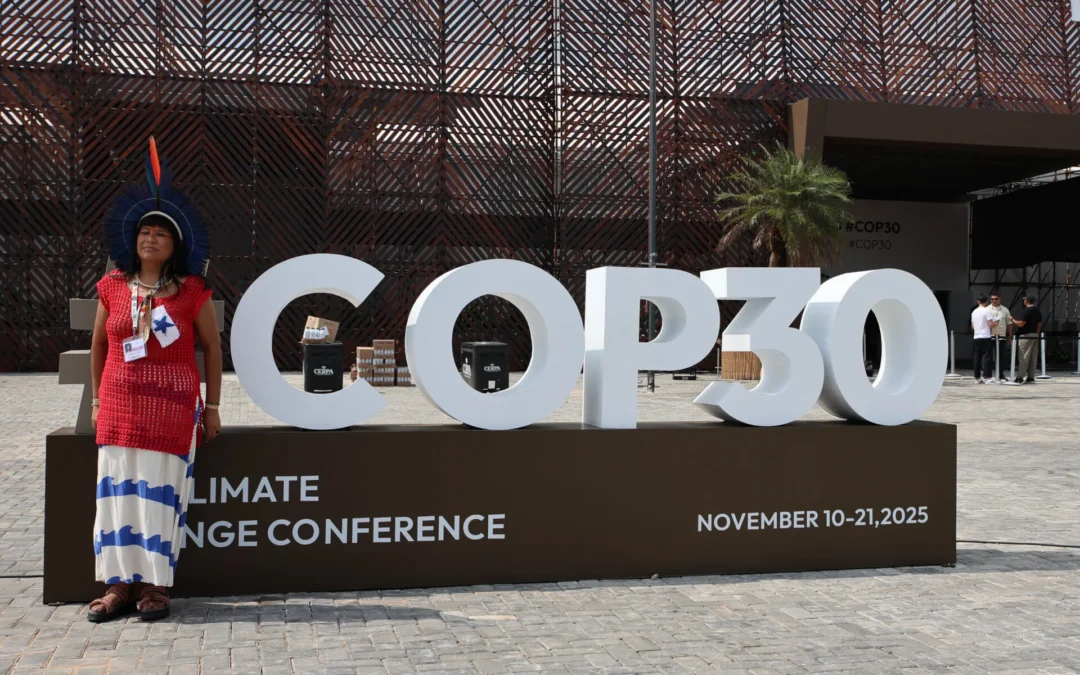
QUNOโ€™s Human Impacts of Climate Change (HICC) staff, Lindsey Fielder Cook and Daniela Campos, were present at the Conference of Parties (COP30) from 9โ€“23 November in Belรฉm, Brazil. This first report focuses on QUNOโ€™s activities and will be followed by a second report offering an analysis of both concerns and positive outcomes.ย  While knowing that more than 56,000 people from all over the world came together to share and negotiate global climate action, some might still wonder what happens inside COPs. To offer a clearer glimpse of this experience, we are sharing a narrated report of the major events, negotiations, and interactions where QUNO brought a Quaker voiceโ€”advocating peaceful, just, and equitable transformations of activities driving existential levels of climate change and related planetary crises.ย  Amplifying our Voice and Values at COP30 – Interfaith events : With our Interfaith Liaison Committee colleagues, we helped host an interfaith Talanoa Dialogue at the Lutheran Church Igreja Evangelica de Confissรฃo Luterana, bringing together over 120 people in person from all over the world, with translation between English and Portuguese, and more than 30 participants online.  During the COP, we supported faith-based colleagues in their efforts, including newcomers navigating the space, and engaged with […]

QUNO at the IPCCโ€™s session in Lima

QUNO at the IPCCโ€™s session in Lima

From 27โ€“30 October, QUNO participated in the 63rd Session of the Intergovernmental Panel on Climate Change (IPCC) in Lima, Peru. The IPCC collates the best available climate science worldwide, and its reports help advise governments and policymakers on what is happening, why, and the available options for climate policy and action. During this meeting, country delegates, scientists, and observers prioritized three difficult key issues: the timeline for the publication of the 7th Assessment Report (AR7); the inclusion of high-risk marine geo-engineering in a Methodology Report; and gaps in the IPCC budget. On the first issue, and for the fourth consecutive attempt, country delegates were unable to agree on a timeline for delivery. On the second issue, QUNO worked effectively with a range of concerned countries and observers to prevent the inclusion of marine geo-engineering as a carbon dioxide removal technology. On the third issue, the budget was passed for 2026 but remains significantly underfunded for the assessment cycle. For more information about QUNOโ€™s work at the IPCC and our Plenary interventions, as well as the Earth Negotiations Bulletin, which references our (FWCC) interventions, please download the reports below.

QUNO Representative brings Quaker Perspective to Disaster Resiliency

QUNO Representative brings Quaker Perspective to Disaster Resiliency

QUNO NY Representative Kavita Desai had the rare opportunity to moderate a panel at the United Nations entitled โ€œInvesting in Resilience to Safeguard the Sustainable Development Goalsโ€ during a special event held on October 16, 2025, hosted by the UN Office for Disaster Risk Reduction (UNDRR) and the UN Economic and Financial Committee.  The UNDRR event, โ€œTowards a Risk-informed approach to Development: Financing Resilient Development Today for a Sustainable Tomorrow,โ€ highlighted the need to increase investment in disaster protection measures such as early warning systems, community protection plans, and resilient infrastructure to safeguard progress made towards achieving the Sustainable Development Goals (SDGs), a series of 17 globally agreed-upon goals that form a blueprint for sustainable peace and prosperity. As Desai noted in her opening remarks, โ€œIt is well known that an ounce of prevention is worth a pound of cure…investing in DRR saves resources in the long-term and futureproofs development gains.โ€   Desaiโ€™s panel provided valuable insight on the necessity of financing resilient development, warning that progress towards the SDGs has been limited and that current investments in disaster risk and resilience account for only about 25% of actual needs in many countries. The panel noted that this funding gap emerges […]

Real Costs of the Push to Rearm in Europe and Beyond: Implications for Arms Control, Business and Human Rights, and International Law

Real Costs of the Push to Rearm in Europe and Beyond: Implications for Arms Control, Business and Human Rights, and International Law

To discuss the costs and risks of exponentially rising military spending, the Quaker United Nations Office (QUNO) Geneva, together with the American Bar Association Center for Human Rights (ABA CHR) and the Womenโ€™s International League for Peace and Freedom (WILPF), co-hosted a public webinar involving a panel of 5 experts from diverse fields. The event, โ€œThe Real Costs of the Push to Rearm in Europe and Beyond: Implications for Arms Control, Business and Human Rights, and International Lawโ€ explored how the rapid increase in global defence budgets affects social investment, democratic governance, and climate resilience. It was attended by a broad community, with participants from the fields of disarmament, arms control, peace-building, human rights, humanitarian law, climate change, gender equality, representing governments, international organizations, academia, civil society, and members of the general public. Setting the Scene Dr. Yvette Issar (QUNO) underscored that global military spending has reached an all-time high of 2.7 trillion USD, a figure projected to rise sharply in the coming decade. These rising figures โ€œare not yielding greater peace, but are instead undermining our shared vision for a sustainable future.โ€ The following guiding questions were posed at the outset of the discussion: Dr. Nan Tian (SIPRI) outlined current trends in military expenditure, describing an โ€œexceptionally […]

A Call for Climate Action: Protect Human Rights and Decrease Military Expending

A Call for Climate Action: Protect Human Rights and Decrease Military Expending

HICC at the Human Rights Council QUNO participated in the climate and environmental discussions held in the 60th session Human Rights Council in Geneva. Through its Human Impacts of Climate Change (HICC) programme, QUNO delivered an oral statement on the critical role of human rights in climate action. Additionally, HICC contributed to a discussion on how military activities undermine the right to a healthy environment through their toxic and hazardous impacts.  Lindsey Fielder Cook, HICCโ€™s Representative, served as a panelist in the side event The Toxic Impact of Military Activities alongside the UN Special Rapporteur on Toxics and Human Rights, and representatives from Earthjustice, the Center for Global Nonkilling, and Dejusticia. The event discussed the findings and implications of the Special Rapporteurโ€™s recent report on the human rights impacts of hazardous substances and waste resulting from military operations. Building on the Quakers Peace Testimony, QUNO emphasized that war is an abomination of human rights and highlighted how this report proves that military activities harm human beings and earth far beyond wartimes. Lindsey also underscored that military activities are responsible for nearly 5.5% of global greenhouse gas emissions. However, countries are not required to report these emissions into their National Determined […]

โ€˜Deadlock of Imaginationโ€™: QUNO Invites Reflection on Approaches to Sustainable Energy Transformation at the Forum on Democracy and Climate Change

โ€˜Deadlock of Imaginationโ€™: QUNO Invites Reflection on Approaches to Sustainable Energy Transformation at the Forum on Democracy and Climate Change

Lindsey Fielder Cook, QUNOโ€™s Representative on the Human Impacts of Climate Change, pointed out clear pathways and criteria to achieve sustainable and equitable energy access at the Forum on Human Rights, Democracy and the Rule of Law. In its 5th session, the Forum addressed the theme: โ€œDemocracy and Climate Change: Focusing on Solutionsโ€, held in Geneva on the 13th and 14th of October.ย  Her contribution can be watched here. Joining the panel on โ€œInterconnected Solutions to Interconnected Problemsโ€, Lindsey emphasized that democracies prioritizing the question, โ€œIs this best for society?โ€ rather than โ€œIs this best for the economy?โ€, are more likely to deliver a sustainable energy transition experienced as fair and effective.  In addition, energy transitions that integrate human rights-based approaches are less likely to face societal backlash. Lindsey advised asking the following questions when evaluating sustainable energy policies: Lindsey invoked the words of recently released from prison Egyptian/British human rights voice,  Alaa Abd el-Fattah, to highlight a divide in global energy transition dynamics, suggesting that we are facing a โ€œdeadlock of imaginationโ€ in the Global North and a โ€œdeadlock of possibilityโ€ in the Global South.Other panelists provided clear examples and best practices on rights-based solutions in the sectors of […]