Newsroom

Humanitarian Challenges in Myanmar: Navigating Conflict and Crisis

17th July 2025

Myanmar Article Photo

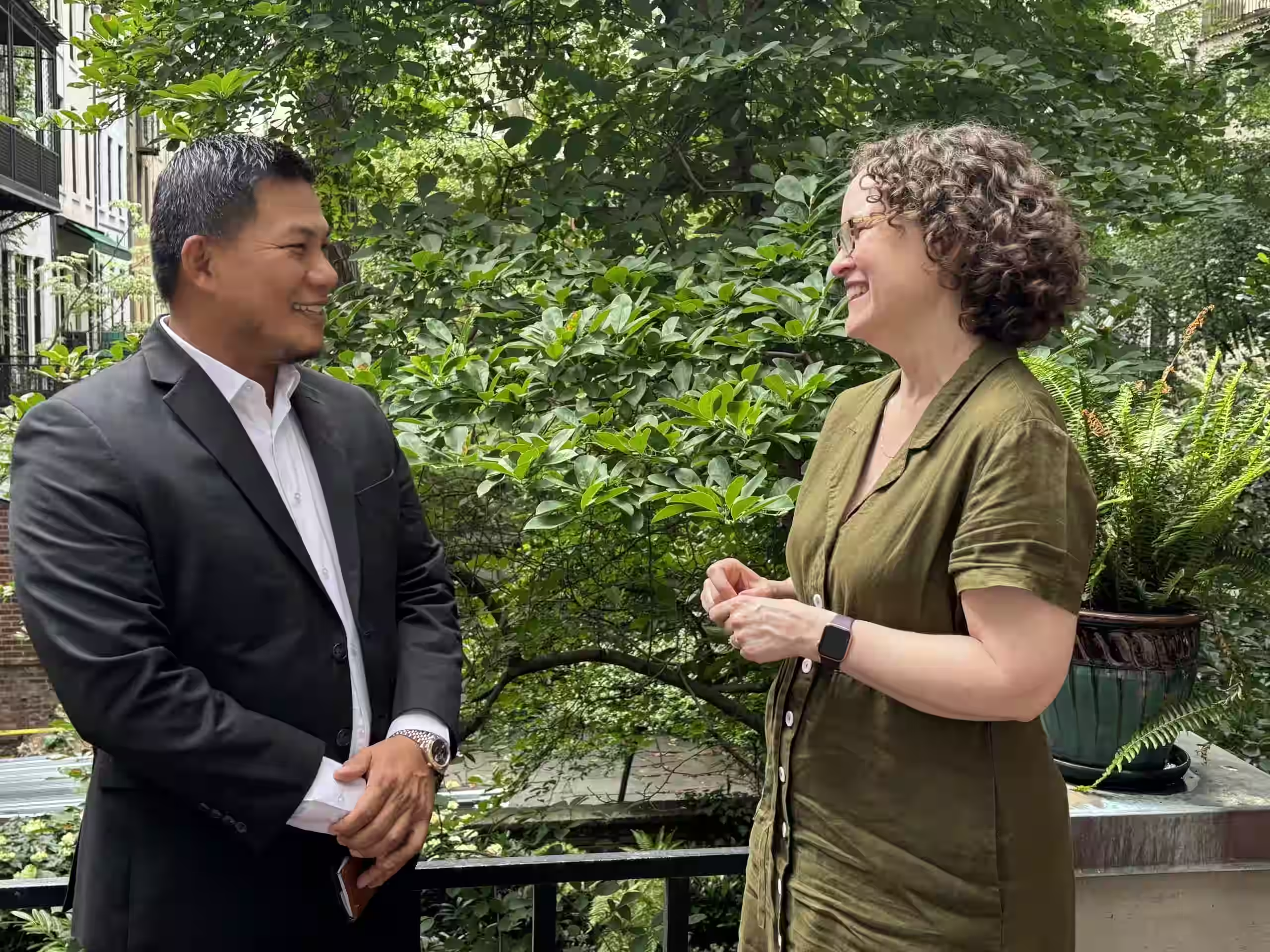
On 9 July, the Quaker United Nations Office hosted a private briefing on Myanmar’s humanitarian crisis in the aftermath of the devastating 7.7 magnitude earthquake that struck on 28 March 2025. At Quaker House, Gum San Nsang, Secretary of the Kachin Political Interim Coordination Team, briefed UN diplomats. With the monsoon season threatening to worsen the humanitarian crisis, he emphasized the need for the international community to address aid distribution issues, reminding them that “each day later is a day worse than before.” 

In his remarks, Gum San noted that the distribution of humanitarian assistance has been exacerbated by the dwindling control of the military junta that seized control during a coup in 2021. He explained that the military has prevented aid from reaching parts of the country not under its control, while diverting aid to its own stockpiles. 

Beyond the focus on humanitarian issues, Gum San also addressed the ongoing conflict situation between the military and armed resistance groups. He highlighted that the struggle to control the mining of rare earth minerals represents a major driver of conflict, especially in northern Myanmar. 

Currently, the UN’s Office of Coordination of Humanitarian Affairs (OCHA) estimates that 20 million people, over one third of the population, are in need of assistance. Despite the significant levels of need, aid delivery remains inconsistent and restricted. The military Junta primarily allows humanitarian aid to reach cities under their control, such as Naypyidaw. Meanwhile, rural and conflict-affected areas, often governed by Ethnic Armed Organizations, are being overlooked.  

The ongoing conflict further disrupts aid operations. The Office of the High Commissioner of Human Rights reports upward of 50 attacks on aid workers. Most notably the Junta fired on a Chinese Red Cross convoy, highlighting the risks on the ground. While some assistance has reached border regions, current efforts fail to meet urgent needs. As aid workers struggle to deliver help in conflict zones, inequitable access to assistance hits vulnerable populations the hardest.  

Meeting participants were grateful for the opportunity to learn more about the situation on the ground. QUNO remains committed to lifting the voices of communities affected by violence and fostering dialogue and deeper understanding among UN stakeholders. Briefings such as these aim to support the UN in efforts to ensure humanitarian access for all, including those in Myanmar. 

Image: QUNO Director, Sarah Clarke (right), talks with Gum San Nsang (left) on the Quaker House terrace.

Explore more

Applications Now Open for QUNO New Yorkย Programmeย Assistantsย 

Applications Now Open for QUNO New Yorkย Programmeย Assistantsย 

The Quaker United Nations Office in New York is now acceptingย Programmeย Assistant applications for the 2026-2027 year. This is an exciting opportunity for young professionals to gain experience at the United Nations, and toย bothย learnย aboutย andย contributeย toย Quaker work at the UN. The application is open to both Quakers and those who align with Quaker values. QUNO highly encourages those interested in international affairs, peacebuilding, and quiet diplomacy to apply. The application period closesย Februaryย 16th, 2026.ย ย  Status: Full โ€“ Time, Specific Term (12 months) Beginning September 1, 2026ย Location: New York, NYย Application Deadline:ย February 16th, 2026, 11:59pm Eastern Timeย For consideration, please attach your Cover Letter and Resume to the online application here in addition to answering the Application Questions.

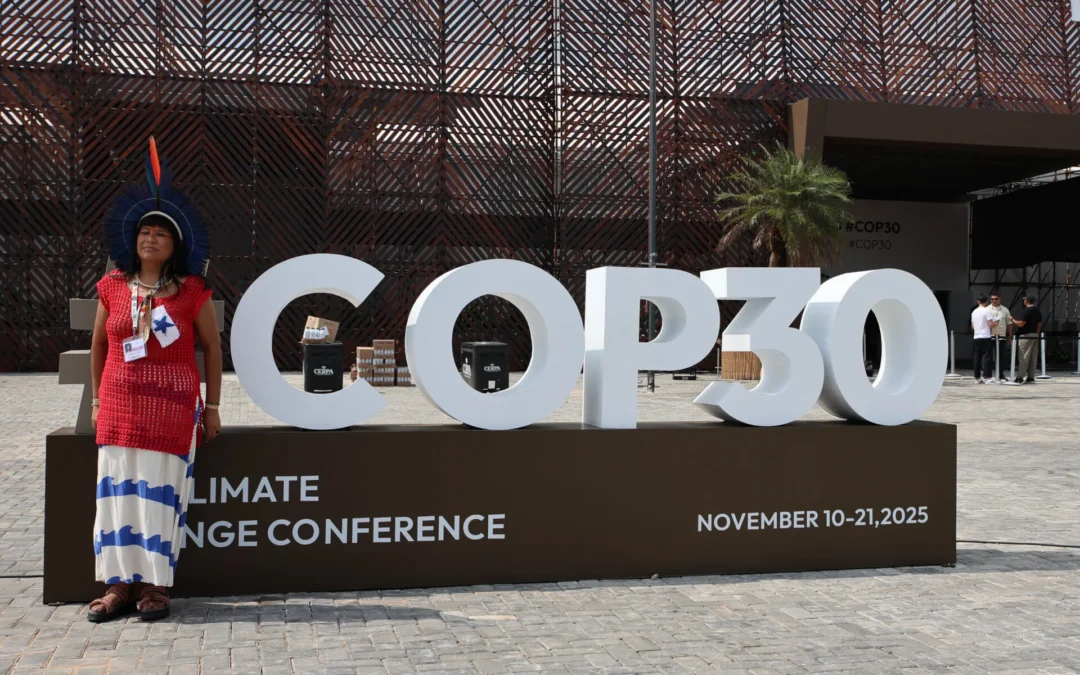
QUNO attends COP30 in Brazil: Report 2 of 2

QUNO attends COP30 in Brazil: Report 2 of 2

QUNO participated in the Conference of the Parties (COP30), held from 9โ€“23 November in Belรฉm, Brazil. Following the first report on QUNOโ€™s activities at COP30 (available here), this second report provides an analysis of key areas of concern as well as positive outcomes observed during the conference. This report explains why COP30 was far from an uneventful COP. Hosted in the heart of the Amazon rainforest, COP30 witnessed a renewed presence of civil society and Indigenous Peoples, intense protests spilling into the venue, and even a fire incident. Within the negotiation rooms, coordinated strategies of denial tried to silence language on fossil fuels, the latest climate science, the major drivers of greenhouse gas emissions, and even the recognition of human rights. However, at COP30, that thick wall of denial began to show cracks, emerging from different negotiation groups. By the end of the conference, participants observed early flowers blooming from these cracks in the form of emerging coalitions bringing together developed, developing, and least developed countries. To read the full report, please download the document below.

Applications are Now Open: Quaker United Nations Summer School 2026

Applications are Now Open: Quaker United Nations Summer School 2026

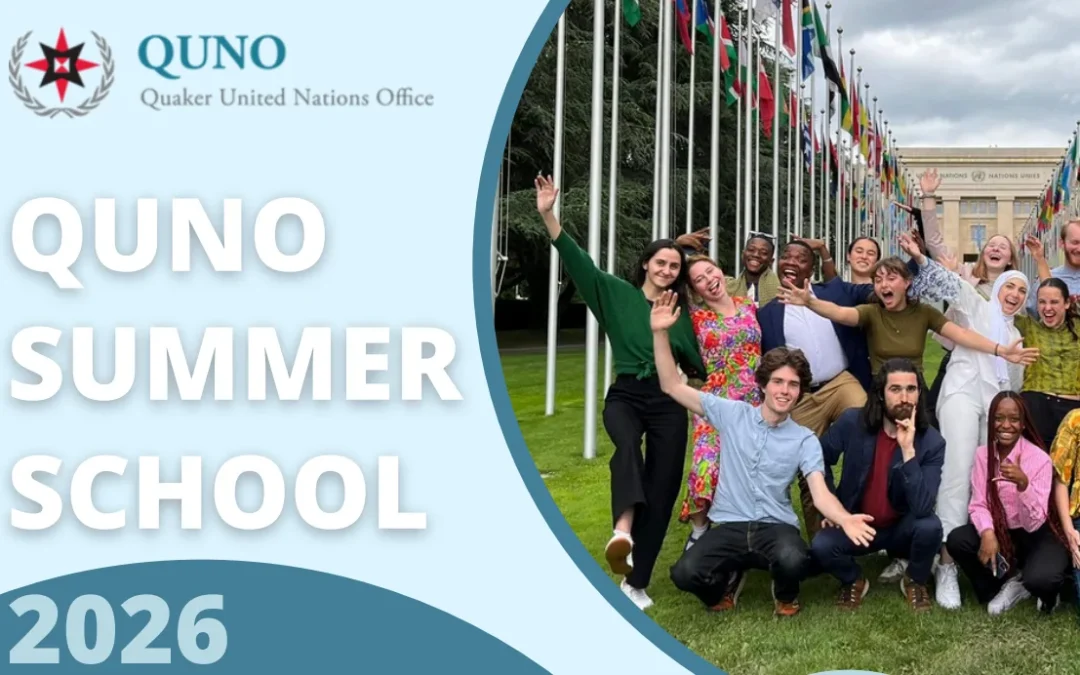
We are excited to announce that the applications for the Quaker United Nations Office Summer School (QUNSS) 2026 are now open!  QUNSS is a two-week programme where young changemakers are introduced to the United Nations and the vibrant international community in Geneva to deepen their understanding of multilateralism, strengthen their policy, negotiation, and advocacy skills, and connect with a supportive international youth network rooted in Quaker values to promote peace, justice, and the protection of Earth.  This yearโ€™s themed edition will explore todayโ€™s debates on the value and challenges of multilateralism, supporting participants to accurately understand, critically question, and humanize the United Nations.  Over the course of the programme, participants will:  We welcome applications from young people aged 20โ€“26 from all regions and backgrounds who are globally minded, locally rooted, and involved in areas such as social justice, community engagement, climate action, advocacy, or policy, among others.  The deadline for applications is January 25th, 2026 at 23:59 Central European Time (CET).  For the full description of QUNSS 2026, please see the document below. To apply, please accessย this application form.

At a critical moment, Security Council Resolution on Gaza falls short

At a critical moment, Security Council Resolution on Gaza falls short

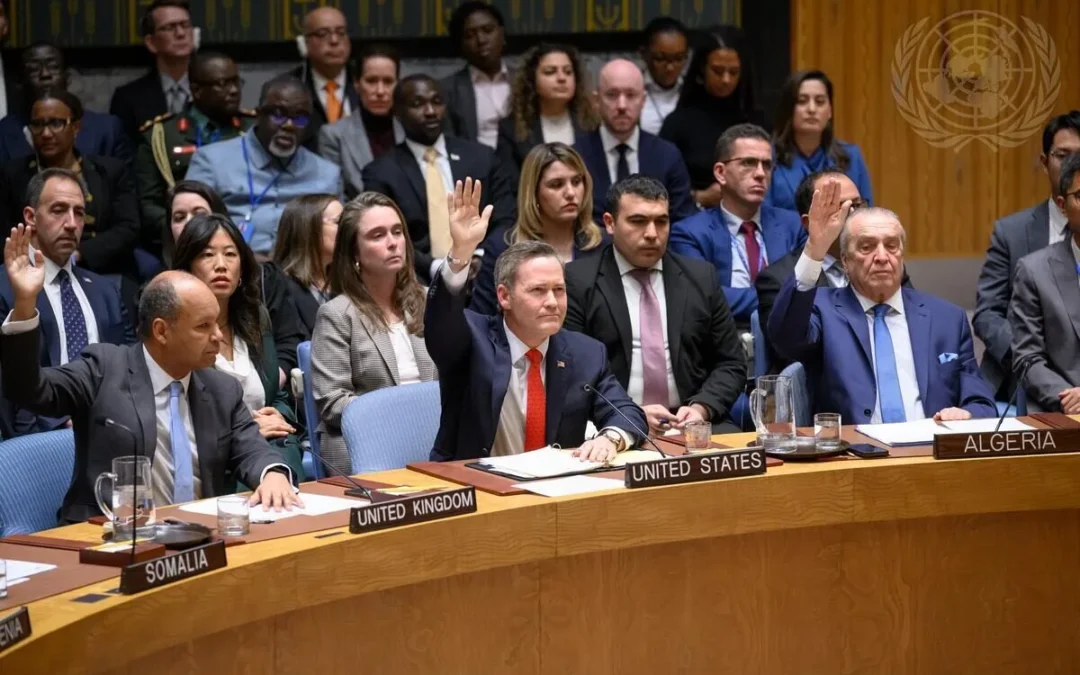
On Monday, November 17, the UN Security Council adopted resolution 2803 (2025) authorizing the creation of an โ€œInternational Stabilization Forceโ€ and a โ€œBoard of Peaceโ€ aimed at addressing the critical security, humanitarian, and reconstruction needs in Gaza. The resolution affirms the importance of enabling humanitarian aid, maintaining a ceasefire, and the goal of working towards โ€œa horizon for peaceful and prosperous coexistence.โ€ However, QUNO notes with concern the resolutionโ€™s disregard for the consent or agency of Palestinians within the mechanisms proposed by the resolution. Furthermore, the resolution fails to establish clear mechanisms for transparency, accountability, and effective humanitarian aid and reconstruction. Both observers and UN member states have pointed out that the resolutionโ€™s unilateral approach could sideline the United Nations and risk repeating colonial actions and ideologies that lie at the heart of the conflict. ย  At its core, the Security Council resolution gives UN backing to the โ€œComprehensive Peace Plan,โ€ also known as the โ€œ20-point plan,โ€ proposed by US President Donald Trump earlier this year. The United States proposed the resolution and lobbied strenuously to push it through the Security Council on an expedited timeline. The resolution gives a green light to main tenets of the Presidentโ€™s plan, principally, […]

Drawing Hope: Children Reimagining Peace Across Borders

Drawing Hope: Children Reimagining Peace Across Borders

In a world often divided, Drawing Hope is a trans-local peace project that uses children’s art to remind us of our shared humanity. Through artwork created by children, the exhibit sends messages of hope, peace, and reconciliation. After being displayed in venues around the world, Drawing Hope arrived at the United Nations in New York City in early November. QUNO worked closely with the American Friends Service Committee, Okedongmu Children, and the Permanent Mission of Ireland to ensure the exhibit could be displayed inside the UN. From 10 to 21 November, diplomats, UN officials, and guests were able to view drawings created by children in eight countries: North Korea, South Korea, Japan, South Africa, Colombia, Cambodia, Ireland, and the United States. Visitors were inspired by the simple example of children working to connect, transcend barriers, and use creativity to build understanding and empathy across divides. Drawing Hope began on the Korean Peninsula, which in 2025 marks 80 years of division between North and South Korea. Over the past eight decades, cross-border interactions have been strictly prohibited, with both sides dehumanizing the other through propaganda, influencing adults and children alike. As a result, many children grew up surrounded by narratives of […]

QUNO attends COP30 in Brazil: Report 1 of 2

QUNO attends COP30 in Brazil: Report 1 of 2

QUNOโ€™s Human Impacts of Climate Change (HICC) staff, Lindsey Fielder Cook and Daniela Campos, were present at the Conference of Parties (COP30) from 9โ€“23 November in Belรฉm, Brazil. This first report focuses on QUNOโ€™s activities and will be followed by a second report offering an analysis of both concerns and positive outcomes.ย  While knowing that more than 56,000 people from all over the world came together to share and negotiate global climate action, some might still wonder what happens inside COPs. To offer a clearer glimpse of this experience, we are sharing a narrated report of the major events, negotiations, and interactions where QUNO brought a Quaker voiceโ€”advocating peaceful, just, and equitable transformations of activities driving existential levels of climate change and related planetary crises.ย  Amplifying our Voice and Values at COP30 – Interfaith events : With our Interfaith Liaison Committee colleagues, we helped host an interfaith Talanoa Dialogue at the Lutheran Church Igreja Evangelica de Confissรฃo Luterana, bringing together over 120 people in person from all over the world, with translation between English and Portuguese, and more than 30 participants online.  During the COP, we supported faith-based colleagues in their efforts, including newcomers navigating the space, and engaged with […]