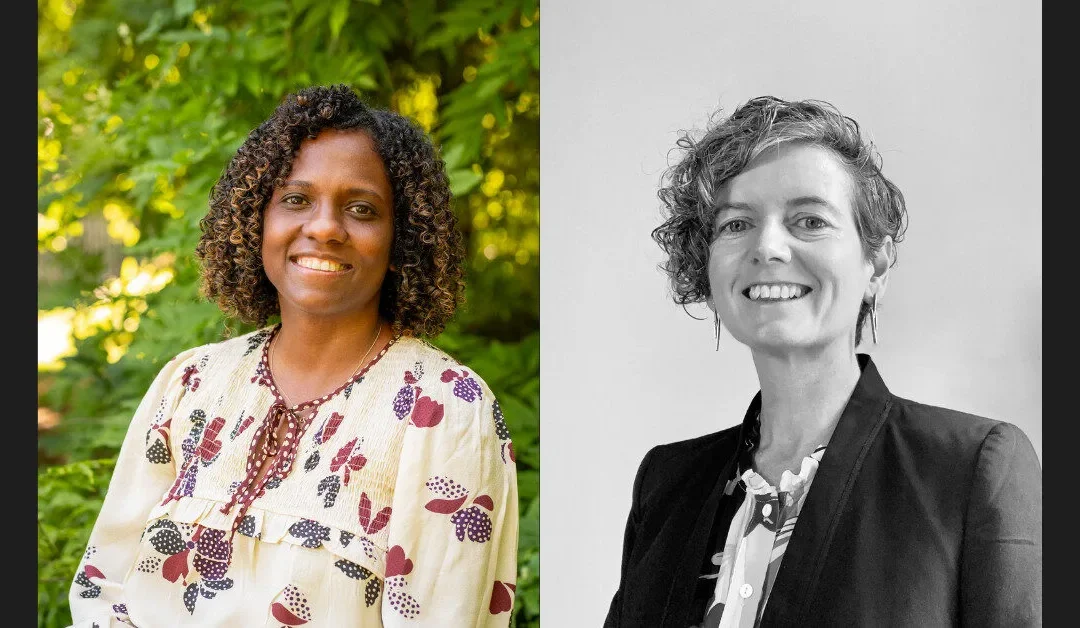
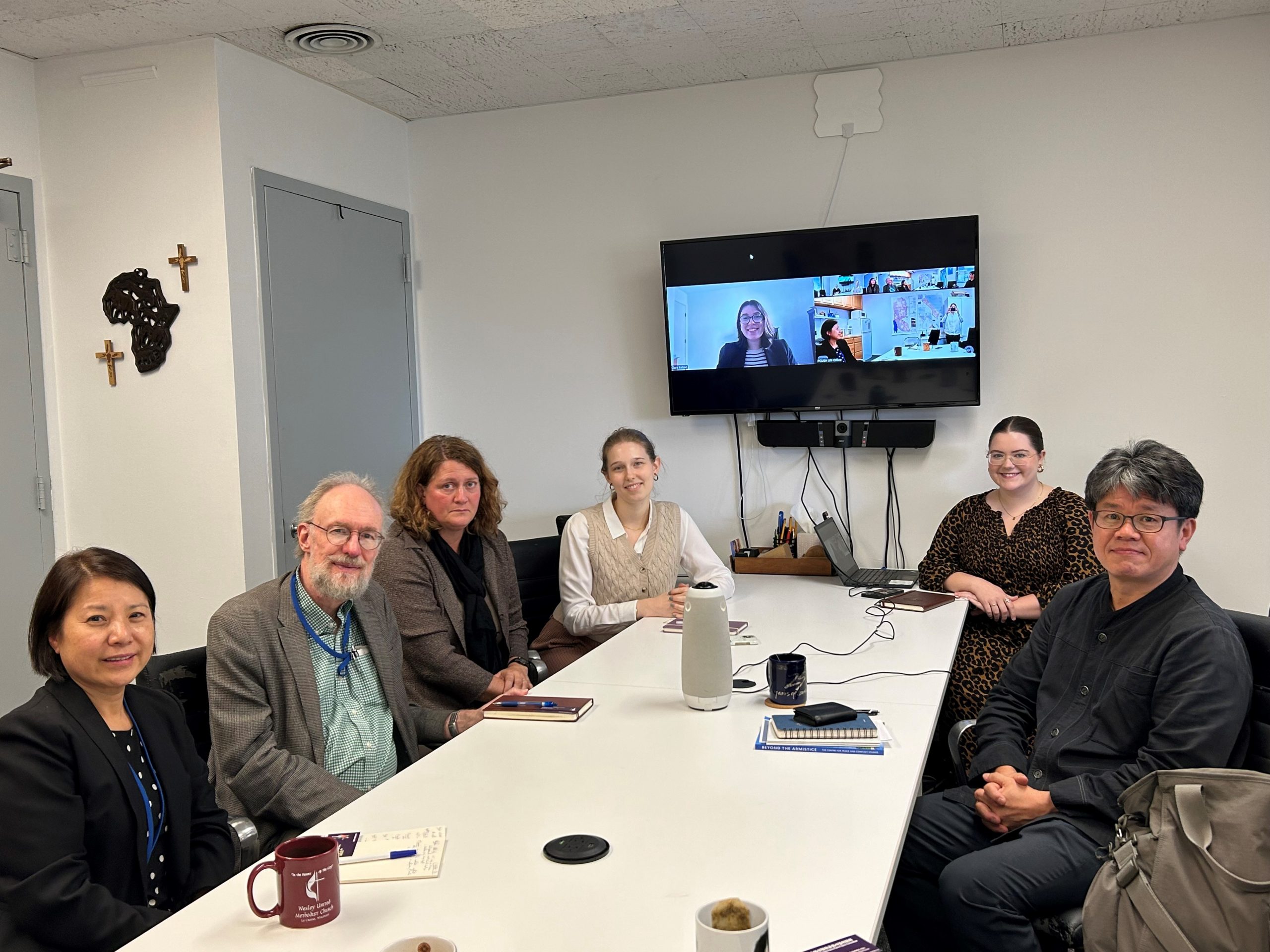
On 1 October, representatives of QUNO New York met with colleagues from the NGO Working Group for Peace on the Korean Peninsula to hear from Reverend Dr. Kim Hiheon. Reverend Kim is a pastor and peacebuilder from the Republic of Korea (South Korea), who engages in Christian activism on social justice, demilitarization, and unification of the two Koreas. The conversation took place in the context of a deteriorating relationship between the Democratic People’s Republic of Korea (North Korea) and South Korea, as North Korea has stated its intention to abandon reunification as their goal.
Though the armed conflict of the Korean War ended 76 years ago with an armistice dividing the peninsula, no peace treaty has been reached amongst the parties to the war. The United States maintains its military presence in South Korea as a continuation of its support for the South Korean government against North Korea and as a strategic outpost in the Pacific as China becomes the focus of US competition. The conversation with Rev. Kim emphasized that the most challenging obstacle to peace and reconciliation on the Korean Peninsula remains the United States’ policy of militarism, which escalates threats from North Korea and results in direct violence to South Korean citizens.
Rev. Kim serves as the chair of the Hyosun-Miseon Peace Park Project Committee, which honors Shim Miseon and Shin Hyosun, whose lives were taken as a consequence of the United States militarization of the Korean Peninsula. On a summer day in 2002, fourteen-year-old Miseon and Hyosun walked a familiar route on the side of a local country road to a friend’s birthday party. Along the way, the girls were struck and killed by an American tank enroute to a military training exercise. The tragic incident prompted a popular movement in South Korea demanding the revision of the Status of Forces Agreement between the United States Army and the Republic of Korea Armed Forces, which prioritizes US military authority over that of the South Korean government. Despite the public outcry for justice and a transformation of the United States-Republic of Korea military relationship, no changes were made to hold those responsible accountable for the harm caused.
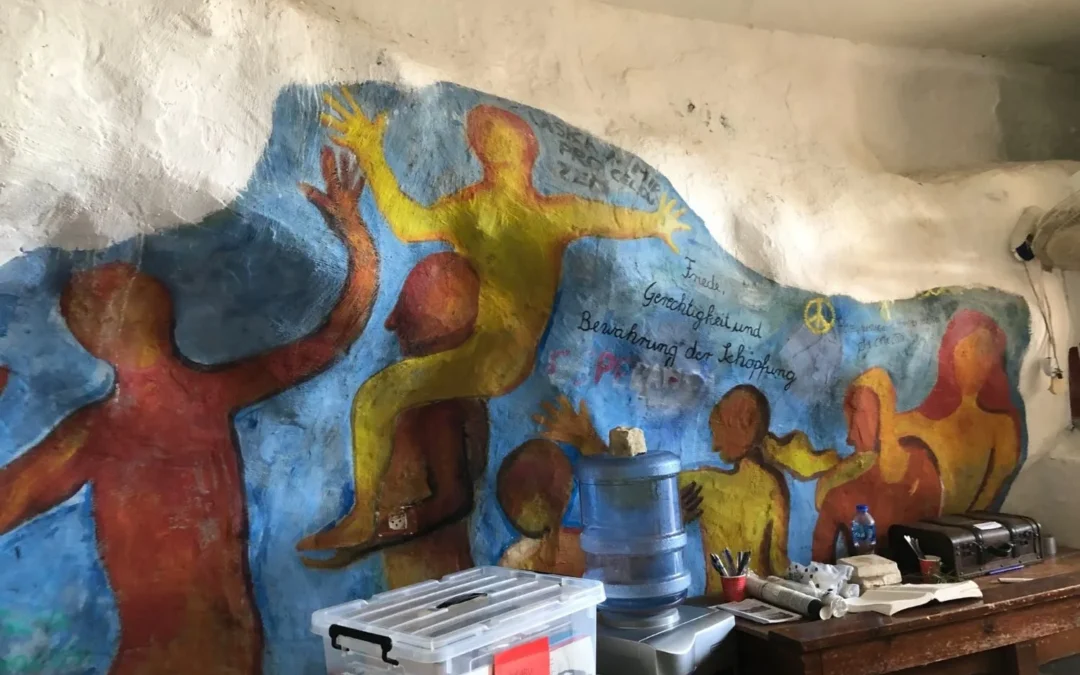
The Peace Park is designed as a memorial as well as a site of documentation. The Committee’s goal is to establish an archive space to keep records of this incident and others in which the United States military inflicted direct violence on the South Korean people. Rev. Kim explained that this type of space is crucial for the work of advocacy for peace and reconciliation, as independent documentation of such incidents, especially in Western media, remains scarce.
For peacebuilders like Rev. Kim and others in South Korea and the United States, the struggle to be heard by people with power to influence military decisions is long and difficult. Still, projects like the Hyosun-Miseon Peace Park envision a transformation of the Korean Peninsula from a place of militarization to one of peace and reconciliation. It highlights the need for US acknowledgement of wrongdoing along the path to a future in which North and South Koreans can live side-by-side in peace and prosperity.