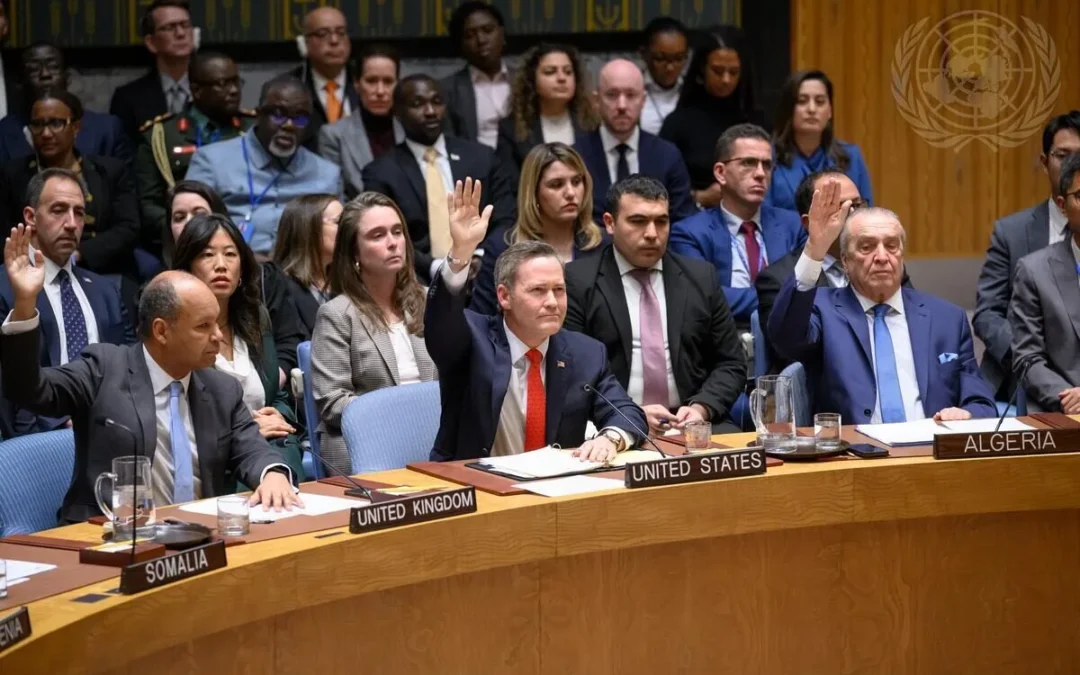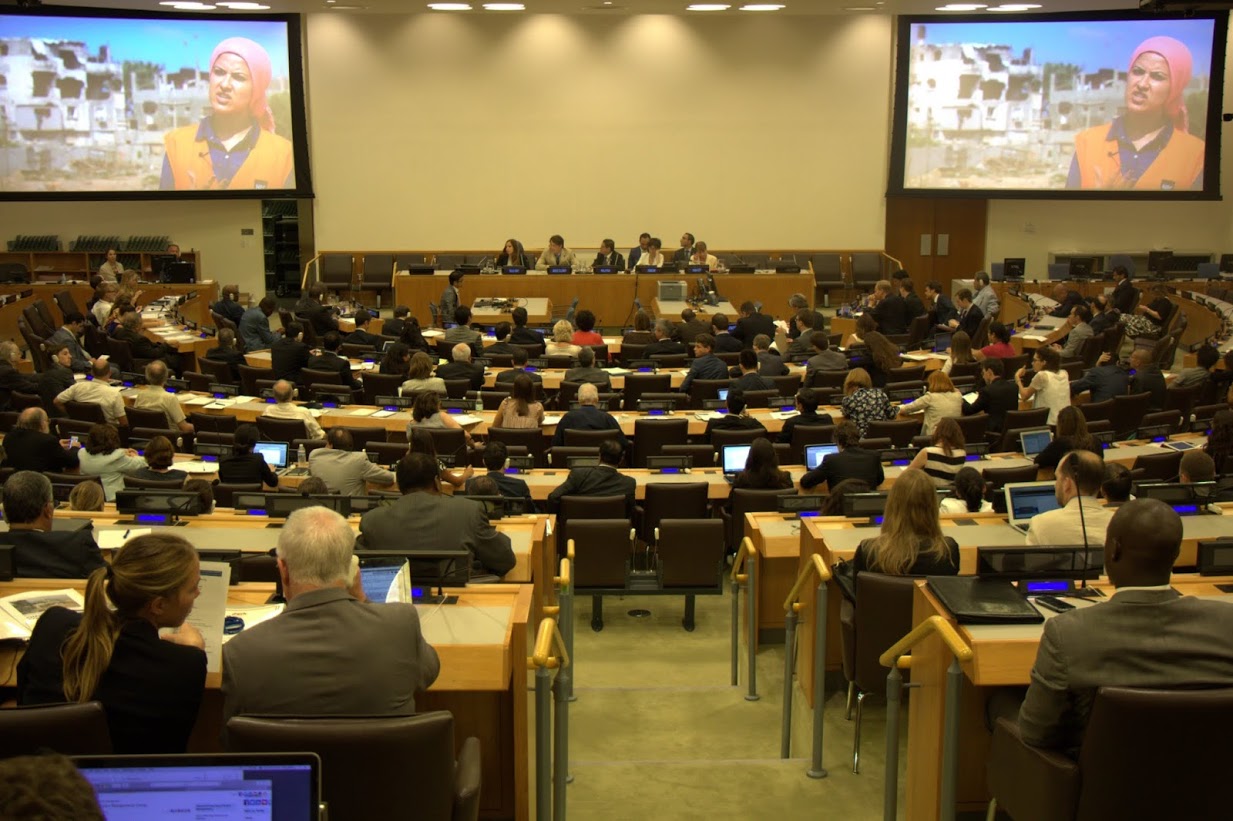
For the first time since 1997 and just the second time ever, the Security Council held an Arria-Formula meeting focusing specifically on the issue of Palestine. Co-sponsored by the Permanent missions’ of Malaysia and the Hashemite Kingdom of Jordan, with assistance from the Israel-Palestine NGO Working Group, the meeting: "Reflections One Year Later and Charting a New Course for Gaza" featured briefings from speakers from civil society and academia, and was well attended by Council members and the UN community alike.
Security Council member states were largely represented at the highest level, and were constructive in their response to the four speakers' testimonies. Many member states welcomed the convening of the Arria-Formula Event, and issued their support for new Security Council initiatives that might arise. There was a general agreement that the current situation in Gaza is unsustainable and must be alleviated, with interventions focusing on the need to lift the blockade, for donor's to fulfil aid pledges, and for actors to ensure that steps are taken to prevent future hostilities.
QUNO has been an active member of the Israel-Palestine NGO Working Group since its founding in 1999. The working group is a coalition of organizations that have meet to share information and advocate for a just peace in Israel and Palestine.

Myanmar “sham elections”: QUNO hosts Quaker House briefing
On 2 December, the Quaker UN Office hosted diplomats at Quaker House for a private briefing in advance of the elections in Myanmar that began on 28 December 2025. QUNO Director, Sarah Clarke, opened the meeting, noting that “the world will be watching carefully to see how the international community responds to the vote.” Sean Dunne, an expert who has supported election observation with the UN and the Carter Center, including in Myanmar, served as an outside briefer. In his remarks, Sean emphasized that the Myanmar general elections, which are being conducted by the military regime that overthrew the democratically elected government following elections in 2020, “fail to meet any recognized international benchmark for credibility or genuineness.” Sean concurred with UN experts, numerous Human Rights organizations, and media outlets describing the elections as a “charade” or “sham election” intended to “solicit recognition from foreign governments and legitimize the continuation of military rule, rather than reflect the genuine will of the Myanmar people.” In Myanmar, voting kicked off on 28 December 2025, with polls being held in roughly a third of Myanmar’s townships. Despite two more voting phases scheduled on 11 and 25 January 2026, several million people, 56 townships, and numerous political parties, including the winner of Myanmar’s last credible election, the National League for Democracy, have been excluded by the military or have chosen not to participate. As Sean explained, these exclusionary factors amount to “an incredibly sophisticated form of election engineering.” The implementation of biometric voting and surveillance technology, new laws criminalizing criticism of the election, and manipulation of representative quotas in Myanmar’s […]